September is National Preparedness Month

SEPT is National Preparedness Month

Are you ready?

September is National Preparedness Month, an annual campaign sponsored by FEMA's Ready Campaign to encourage individuals, families, and communities to prepare for natural and man-made disasters.

We take it further by giving you specific Arizona preparedness preps for our extreme environment. Read on to learn more.

PREPPING 101 is a class we’ve been doing for almost 9 years, and it goes beyond the basics of Band-Aids and a jug of water in the closet. Learn practical preps like where and how to start and doing it on a budget, plus preps for desert-specific needs. How to cool a house with no power, dealing with waste, and how to procure water. Things you can do now that give you peace of mind whether you lose your job or we lose our infrastructure in a global catastrophe. No bunkers and zombies here, just practical, easy steps using today’s science and yesterday’s knowledge together in a fun and detailed presentation with demos and Q&A. Safety and security for you and your family and the greater community. View class info here: Prepping 101.

Are You Prepared? National Preparedness Month is the perfect time to build your local resilience against Arizona's specific climate and environmental hazards.

Here are some desert-specific tips and tricks to get you started.

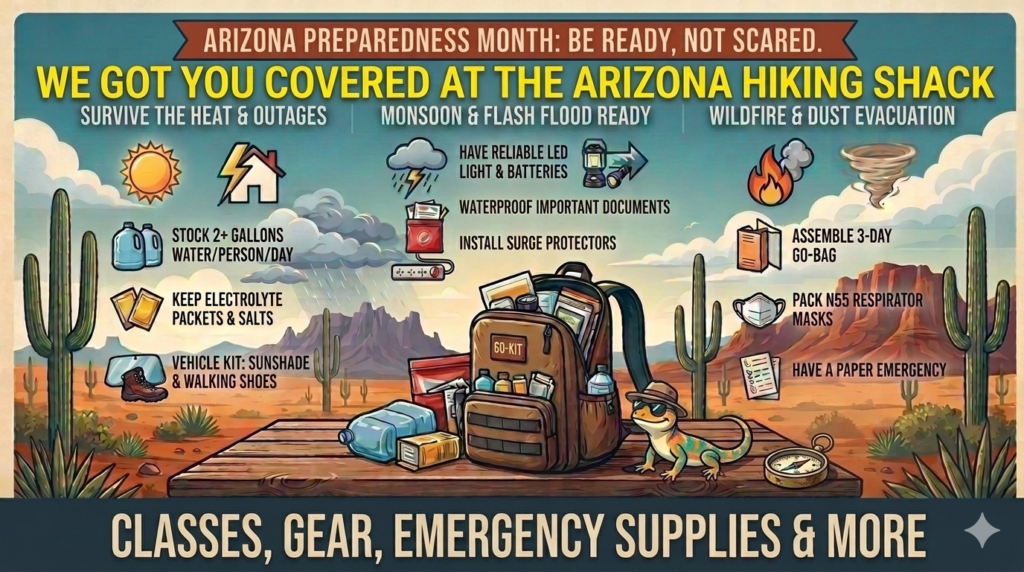
☀️Extreme Heat & Power Outages

  • Water Storage: Store 1.5 to 2 gallons of water per person per day to account for Arizona's extreme summer dehydration risks.
  • Hydration Supplies: Keep a stock of electrolyte packets and oral rehydration salts in your vehicle and home kits.
  • Backup Cooling: Pack battery-operated or pump misters and misting fans, cooling towels, and a high-capacity power bank to run them during blackouts.
  • Vehicle Heat Safety: Keep a physical sunshade, extra coolant, and sturdy walking shoes in your trunk in case of a desert breakdown.
  • Many of the things you might need can be found at thrift stores.

How to cool a house:

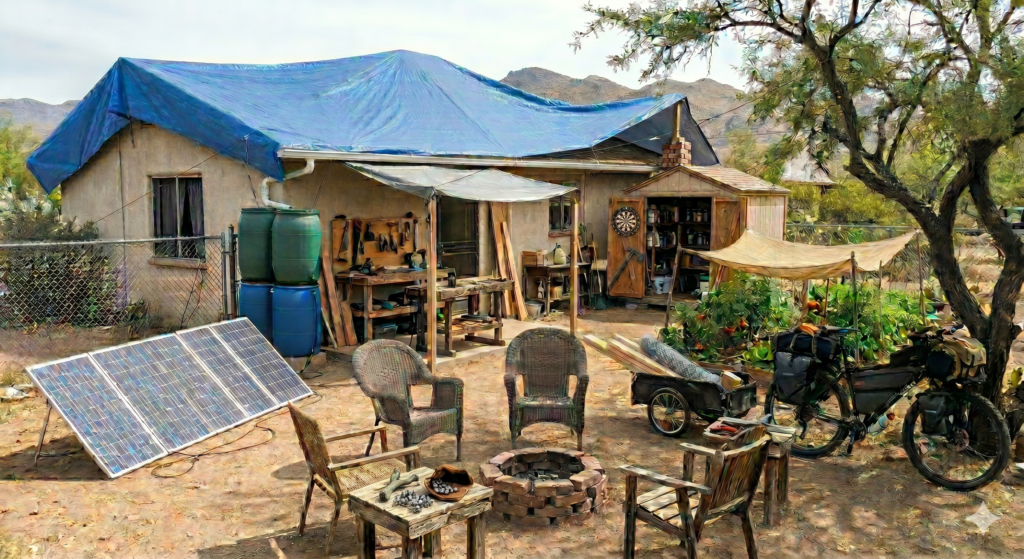
To cool a house in Arizona without power, you must block solar heat during the day, maximize ventilation at night, and use water for evaporative cooling. Desert heat can quickly become life-threatening without air conditioning, making passive cooling techniques critical for survival.
Phase 1: Daytime Heat Defense (Block the Sun)

  • Cover the entire house with tarps (heavy-duty silver reflective is best) if possible. Lay 4x4s on top of bricks on the roof of the house Seal the windows to raise the tarp 8-10 inches. Tack it down and tie down the tarp tight to good sturdy anchors under trim or on the ground. This will provide shade for the entire house, lowering temps by 20 degrees F.
  • Close all windows, doors, and blinds before the outdoor temperature surpasses the indoor temperature.
  • Cover glass surfaces: Hang heavy blankets, cardboard, or reflective space blankets over windows to block radiation.
  • Isolate your space: Group everyone into a single, well-insulated room on the lowest floor or north side of the house.
  • Keep heat out: Avoid opening exterior doors or using indoor gas appliances that generate extra warmth.

Phase 2: Nighttime Ventilation (Purge the Heat)

  • Monitor the air: Open windows only when the outdoor temperature drops below the indoor temperature.
  • Create cross-ventilation: Open windows on opposite sides of the house to let trapped hot air escape.
  • Utilize high openings: Open high windows or skylights if available, as hot air naturally rises to the top of the house.
  • Secure the home: Close everything back up at dawn before the sun begins to bake the outer walls.

Phase 3: Personal & Evaporative Cooling

  • Use wet sheets: Hang damp towels or sheets in open doorways or windows to cool incoming night breezes.
  • Mist your skin: Spray your skin with water and fan yourself manually; even small air movements speed up sweat evaporation.
  • Wear damp clothing: Put on a wet t-shirt or wrap a damp bandana around your neck to target major blood vessels.
  • Stay hydrated: Drink room-temperature water constantly, even if you do not feel thirsty, to replace lost fluids.

Other Concerns

Critical Safety Limits

  • Watch for heat stroke: Seek immediate medical help if anyone shows confusion, a rapid pulse, or stops sweating.
  • Know when to leave: If indoor temperatures exceed 95°F (35°C) and you cannot cool down, relocate to a designated community cooling center.

⛈️ Monsoon & Flash Flood Readiness

  • Emergency Lighting: Stash heavy-duty LED flashlights and lanterns in easy-to-reach places for frequent monsoon power drops.
  • Document Protection: Seal physical copies of deeds, IDs, and insurance policies in airtight, waterproof bags against sudden flood waters.
  • Tech Power Safeguards: Install high-joule surge protectors on major appliances to protect against intense desert lightning strikes.

🔥 Wildfire Evacuation Basics

  • Go-Bag Essentials: Assemble a lightweight "Go-Bag" containing a 3-day supply of non-perishable food, water, and prescription medications.
  • Respiratory Protection: Include N95 or P100 masks and a bandana in your kit to protect your lungs from blowing wildfire smoke and dust storms (haboobs).
  • Communication Plan: Write down out-of-state emergency contact numbers on a paper card, as local cell towers can easily become overloaded.

Core Action Steps

  • Know your risk: Learn what emergencies could happen where you live by checking resources on Ready.gov.
  • Make a plan: Create a family emergency plan early to save time and reduce stress. Starting a prepper pantry is a great way to begin.
  • Build a kit: Gather enough food, water, medicine, and a go-bag with essentials to stay safe for 72 hours or until help arrives.
  • Get involved: Take a first aid or CPR class, join a C.E.R.T. team or community garden group, or give blood. You can learn through organizations like the American Red Cross or join online.

And

TAKE A CLASS AT THE SHACK!

Now go play outside...or inside!!!

Leave a Reply

Your email address will not be published. Required fields are marked *

Recent Posts

When it comes to sleeping bags, two main types of insulation reign supreme: down and...

Archive Months